(919) 555-0142

Why Your New Roof Needs the Right Gutters

A roof's job is to move water off the house. Gutters are what finish that job — and they're the part most people never think about until there's a problem at the bottom of the wall.
What goes wrong
Undersized gutters. Standard 5-inch gutters are fine for many homes, but a steep pitch or a large roof area moves more water than they can take. During a heavy North Carolina downpour, the excess sheets straight over the front edge — usually right where you walk in.
Too few downspouts. A long run with one outlet at the end is a common shortcut. Water pools in the middle, the gutter sags under the weight, and the pitch that was there originally is lost.
Pine needles. The Triangle is full of pines, and needles are the worst thing for gutters. They knit together into a mat that holds water rather than letting it pass.
What that costs you
Water backing up under the shingle edge rots the fascia board and the roof decking behind it. From there it runs down the siding, and eventually pools against the foundation. Foundation work costs many times what gutters do.
What proper drainage looks like
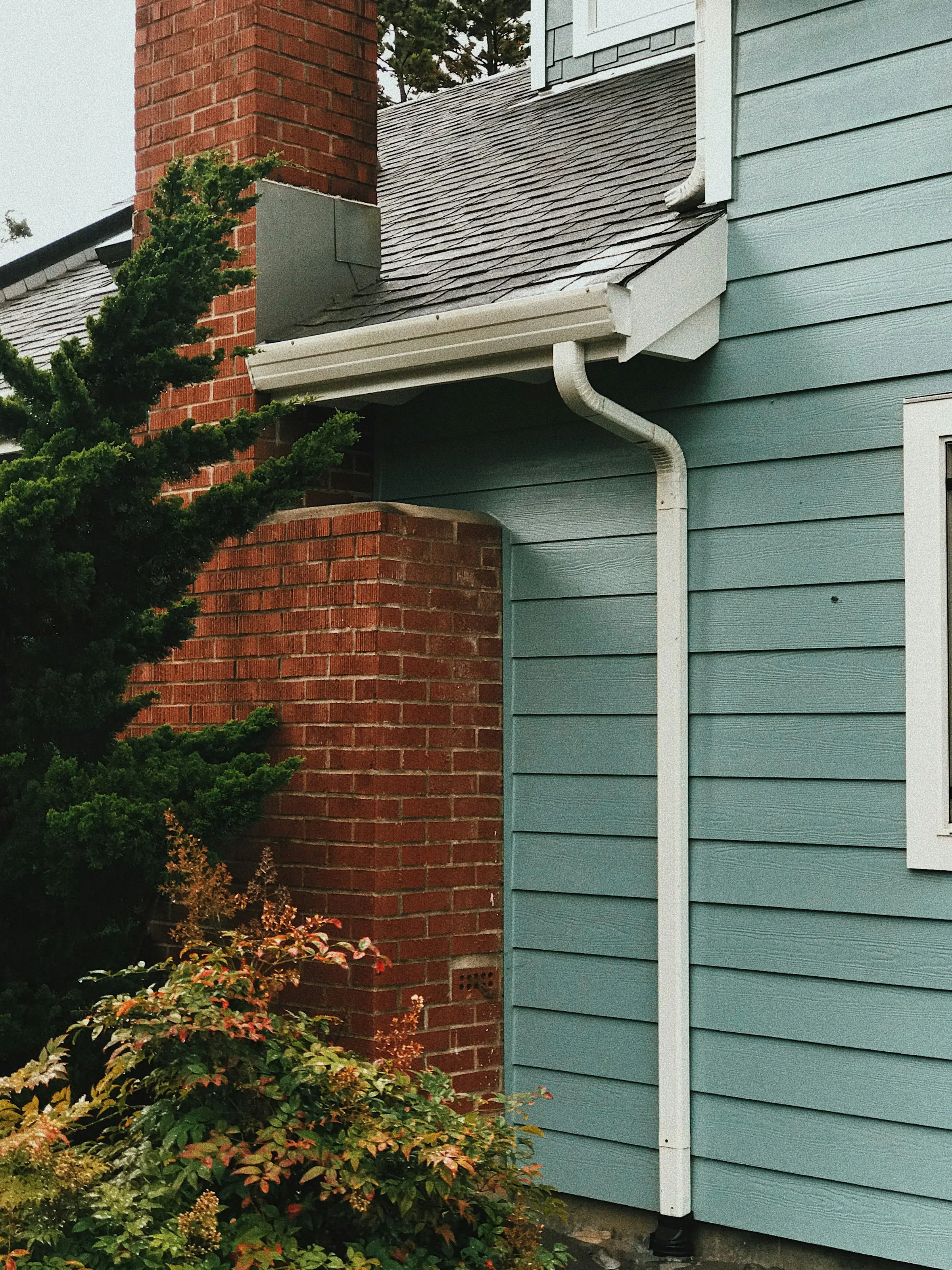
We form seamless aluminium on site to the exact length of each run, so there are no joints along the length to split. Downspout sizing and placement are worked out from the actual roof area and pitch, not matched to whatever was there before. Where pines are close, guards are worth the money.
If your fascia is already soft or stained, that gets repaired before the new gutter goes up. Hanging new gutters on rotten board just hides the problem for a couple of years.
Having a roof replaced? That's the right moment to sort the gutters too — the access is already there, and the two systems only work properly together.